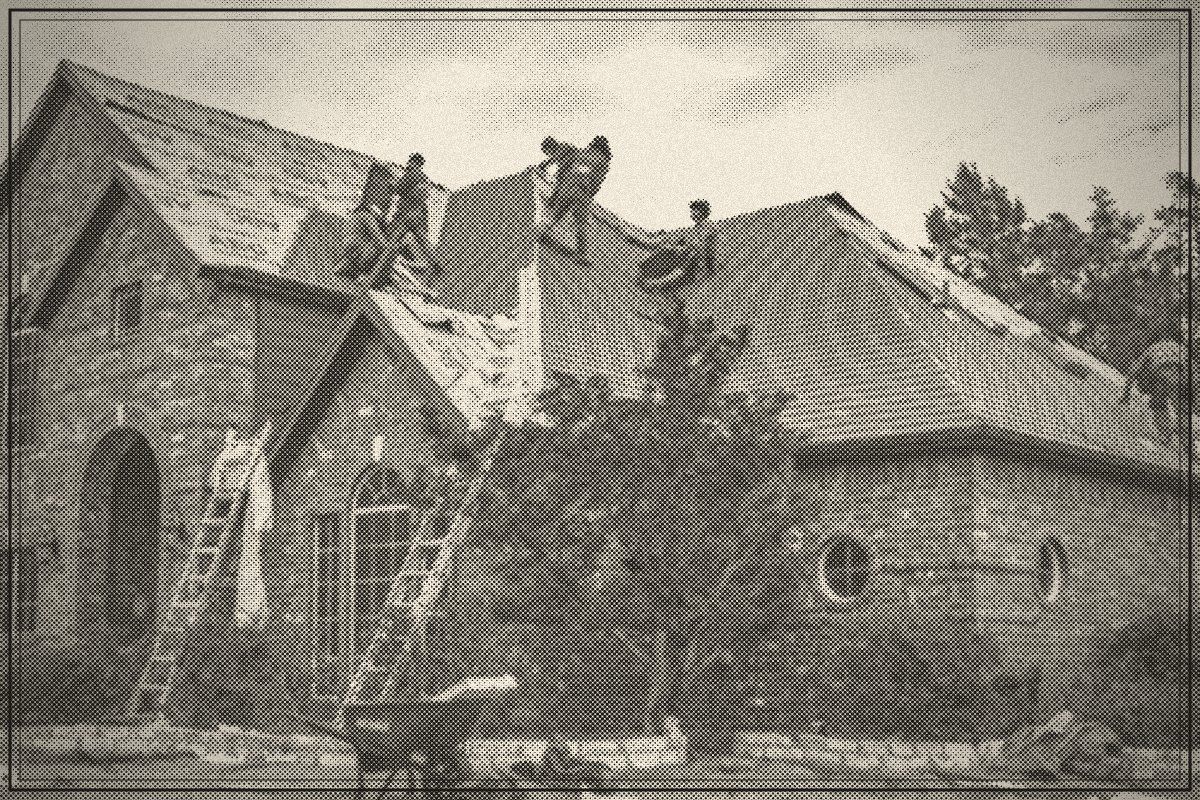
What a hail claim looks like, from first call to final check
In your corner, here at home.
In Oklahoma, you may go through a few of these over the years, spaced out far enough that nobody remembers how it goes. Here are the six steps in plain English, including how the adjuster decides and the one that gets missed.
By Keagan Henson, licensed agent · AAA Insurance in Yukon, Enid and Edmond
YUKON, Okla. – Here's something I see all the time. Here in Oklahoma, a lot of homeowners go through a few hail claims over the years, sometimes more. But they're usually spaced out, so when the next one comes, nobody remembers how it goes.
On May 8, 2026, golf-ball-size hail came down on the south and southwest side of Yukon, where my family and I live. A lot of you have asked me what happens next. So here it is, step by step.
One thing first: whether and how to file a claim is your decision, and what's covered is up to your policy and your insurance company. This is how the process usually works, not advice about your policy. For that, call or text our team. Every person on it is a licensed agent.
Think you might have a claim? Call or text (405) 494-6550 to schedule a call with Keagan or the team, and say, "I had hail damage. Can you walk me through it?" We'll help you figure out whether and how to file a claim.
1. Stay safe, stay off the roof, and stop more damage
We recommend never getting on the roof. Roof work is dangerous, and even the roofing manufacturers' trade group says it's for trained professionals, who know how to work up there without damaging the roof further. The Oklahoma Insurance Department's advice is to have your roof inspected by a trusted roofing contractor.
Stopping more damage is on you, too. That part is on you: your policy expects you to take reasonable steps to keep things from getting worse. It depends on the policy; we'll show you where it's written. If hail broke a window or opened a hole, cover it: a tarp, boarding up the window, moving things out of the water, whatever keeps the rain out. The Oklahoma Insurance Department says to cover broken windows, holes and leaking roofs, and to keep all receipts. Hold off on the full repair until your insurance company has had a chance to see the damage.
2. Call or text us first
Call us. We want to talk with you, not just take a message. Here's what that call looks like:
- We'll check on how you're doing first.
- We'll go over the damage with you: what you're seeing, and what the storm did.
- We'll go over your coverage and your deductibles, your all peril deductible and your wind and hail deductible, in dollars, so there are no surprises.
- We'll walk you through the process, step by step, and help you figure out whether and how to file a claim, whichever company your policy is with. Then we'll help you report it, or point you in the right direction.
Your policy sets how long you have to report damage, so don't let it sit. Have the storm date ready.

3. Call a trusted roofer
After you've called us, the next call I'd make is to a trusted roofer. A good roofer knows what hail damage looks like and where to look for it, and can tell you what they find before you decide anything.
Never get on the roof yourself. Have a trusted roofer come out and inspect it.
After a big storm, roofers knock on a lot of doors. The Oklahoma Insurance Department's advice: confirm the contractor's license, check references and phone numbers, and get more than one bid. Don't pay up front, and be careful with anyone who offers to waive your deductible. The Department says that's illegal. Never sign a contract with blank spaces, and keep a copy.
Where do you find a trusted roofer? Call your agent. We can't endorse a roofer, but we've heard about a lot of them, and we can give you some names to consider.
A lot of the time, your roofer works right alongside the adjuster for you. That can be a good thing. It takes a lot off your plate. Just ask for copies of everything along the way.
One thing I'd highly recommend: find a roofer you believe will work well with the adjuster. A roofer who doesn't understand insurance, or doesn't communicate professionally, usually doesn't help the claim process go smoothly, especially if they're telling you the wrong thing about how it works. A few questions to ask before you sign:
- Have you worked with insurance adjusters on hail claims before?
- Will you meet the adjuster at the house and go over the damage together?
- How will you document what you find, and will I get copies?
- If you and the adjuster don't agree on something, how do you handle it?
And if a roofer tells you what your policy will or won't pay, call us. That's a question for your policy, and we'll show you where it's written.
4. The adjuster comes out
Your insurance company sends an adjuster to look at the damage and estimate it. Ask to see identification. If you can, be there for the visit. If a roofer has already looked at it, it can help to have them there too.
How companies usually decide: a repair, one or more sides, or the whole roof
People ask me this a lot. Every company does it a little differently, and your policy has the final word. But here's how it usually works.
The test square. On each slope of the roof (each side that faces a different direction), the adjuster marks off a test square: 10 feet by 10 feet, or 100 square feet. Then they count the hail hits inside it. A test square is a sample, not the whole roof, so where it goes matters. That's one more reason to have your own trusted roofer look too.
Not every mark counts. What they're looking for is damage that changes how the roof works: a shingle that's cracked or punctured so it won't shed water the way it should. Granules knocked loose, by themselves, usually aren't counted that way.
The number. There's no one national rule. Each company sets its own. A common number you'll hear is about eight hits in a test square before that slope is treated as needing to be replaced.
From there, it usually lands one of three ways:
- A repair. A few hits, or hits scattered here and there. The roofer replaces the damaged shingles and leaves the rest.
- One or more sides of the roof. One or more slopes cross the line and the others don't, so those slopes get replaced.
- The whole roof. Enough slopes cross the line.
Why some people get a repair instead of a new roof. After a storm like May 8, 2026, we don't see it a lot in Oklahoma, but it does happen. Usually it's because the hits didn't reach the company's number, they were on only one side, or what got hit was granules and not the shingle itself. Some companies also weigh the roof's age in the decision. And asphalt shingles can be repaired: the manufacturers' trade group says most parts of the roof can be fixed on their own.
Matching. If part of a roof gets new shingles, they should match what's there. That's harder than it sounds. Colors fade, and shingle lines get discontinued. A roofer can use leftover shingles from when the roof went on, or the shingle's name, color and install year, to find a close match, and the manufacturers can help. Here's what a lot of people don't know. In Oklahoma, the company generally replaces what was damaged with like kind and quality. It doesn't have to replace the sides that weren't damaged just so everything matches. So if a partial replacement leaves one side of the roof or the siding not matching the rest, that's where a matching endorsement for siding and shingles can really come in handy. Without one, the homeowner takes that risk. Whether you have it depends on your policy, and we'll show you where it's written.
If what the adjuster found doesn't line up with what your roofer saw, call or text (405) 494-6550 to schedule a call with Keagan or the team, and say, "I had hail damage. Can you walk me through it?" We'll help you understand where things stand and point you in the right direction.
5. The check, and how the math works
This is the part that surprises people.
- Your deductible comes off first. That's what you pay before insurance kicks in. Many home policies have a separate deductible just for wind and hail, and it may be a percentage of your home's insured value instead of a flat dollar amount.
- How your roof gets paid depends on your policy. There are three ways a roof usually gets paid: replacement cost(pays to replace it with a similar new roof), actual cash value(pays what the old roof was worth, with its age and wear taken off), or a roof payment schedule(pays a percentage that gets smaller as the roof gets older). With replacement cost, it often comes in two checks. The second one is the recoverable depreciation: the roof money held back until the job is finished.
- If you have a mortgage, tell your mortgage company. It has a financial interest in the home, and it may be part of how the payment is handled. When the check is $10,000 or more, it's usually made out to you and your mortgage company.
If things seem stuck, call or text us. We'll help you find out where it stands.
6. After the roofers leave: get the new roof on your policy
This is the step that gets missed. On many policies, once the work is done, the insurance company pays out the recoverable depreciation, and the claim gets closed. What often doesn't happen is the roof getting updated on your policy.
The claim and the policy are usually handled by different people, and that update often doesn't make it to your agent or the service team. With some insurance companies, a new roof can change your home rate. If nobody updates it, your policy may still be priced on the roof that came off.
One thing I'd highly recommend: ask your roofer for a paid invoice that shows the job is complete, not just the estimate, with the roof type and any impact rating (Class 3 or Class 4) on it. On many claims, the adjuster needs it to pay out any recoverable depreciation, and your insurance company needs it as proof of the new roof.
Then call or text us. We'll check what your policy shows and help you get the new roof updated. More on that: New roof since May 8, 2026? Its age matters to your insurance.
What we're going to do when you call
That's the New-Roof Rate Check. It works by phone or text, wherever you are in Oklahoma, or at any of our offices in Yukon, Enid or Edmond. Looking doesn't commit you to anything. Have your declarations page (the page that lists your coverage and what you pay) handy, and your roofer's paid invoice if you have one. A licensed agent on our team is going to:
- Ask how the claim went, if you filed one. What did you learn? What would you change next time? That helps us shape your coverage around it.
- Look at the coverage you have now, new roof included.
- Look at what AAA and other companies can offer you, and do the legwork for you. Your home, and your auto too if bundling makes sense, side by side.
- Talk through the coverages and what each company offers you, so you're comparing more than a price.
- Look at your wind and hail deductible, in dollars.
We'll give you the facts and lay out the paths you could take. Then you make the decision, and we'll help and support you whichever way you go. If the honest answer is "stay right where you are," I'll tell you.
Before the next storm
- Know your wind and hail deductible, in dollars, before you need it
- Take "before" pictures of your roof and house, from the ground
- If your roofer leaves extra shingles, keep a bundle, and write down the shingle's name and color
- Put your policy and your roofer's paid invoice in one folder
- Put our number in your phone: (405) 494-6550
Why now
Call this month.
Where these facts come from: Oklahoma Insurance Department storm guidance (May 13, 2026); Oklahoma Insurance Department, FAQs and home and auto rate tips; NOAA Storm Prediction Center, May 8, 2026 storm reports; InterNACHI, "Mastering Roof Inspections: Hail Damage, Part 12," Kenton Shepard and Nick Gromicko; Darrell L. Smith, IIBEC Interface (February 2013); Giancarlo Grant, " Hail to High Variance: Rethinking Test Squares and Roof Damage Assessment," Claims Journal (May 6, 2026); Asphalt Roofing Manufacturers Association, "Asphalt Shingle Roofs are Repairable"(Feb. 18, 2026). How a company decides varies by company and by policy.
What's on your mind? Call or text (405) 494-6550 to schedule a call with Keagan or the team, and say, "I had hail damage. Can you walk me through it?"

and the whole Yukon team
Questions about your own policy? Talk to a helpful person.
Schedule a call with Keagan or the team.
Yukon (405) 494-6550 · text Enid (580) 242-7100 · text Edmond (405) 513-6500 · text
Call or text any team. If we miss your call, we'll always call you back.
Recent posts